
Frequently Asked Questions
As long as you retain between a 5 and 25 degree forward slant (positive slope) on the gutter guard once installed and ensure you have the front edge of our gutter guard lay flat on the front edge of your gutter, then you should achieve optimal performance.
Note: Between a 5 to 25 degrees forward slant (positive slope) is also equal to approximately a 1/12 to 6/12 pitch. If your roof is steeply pitched or your gutter is hung low, it is recommended to drop the slope of the gutter guard to between 5 and 10 degrees.
This is where discolored streaking appears on the front side of a gutter due to rainwater dripping over the sides. This can happen whether you have a gutter guard installed on your gutter. However, this tiger striping can be more prevalent on the front of a gutter if a gutter guard is installed. Ironically, you are more apt to notice tiger striping once you install gutter guards since you may not have been assessing your gutters in the same way before. If you are noticing any tiger striping with gutter guards installed, then there are a few things you can do to reduce it from continuing to occur or eliminate it altogether:
Clean off any debris that may be sitting on top of the gutter guards, which typically be done from the ground using The Gutter Guard Brush on the end of any standard extension pole.
Make sure the gutter guards are installed correctly. Sometimes, a minor adjustment to the guards is required to eliminate rainwater running over the front of the gutter. Refer to the page of the Install Guide that addresses “removing the gap and trough depth.”
If a high volume of rainwater flows down the roof valley(s), leading to an inside miter, and/or from an upper downspout onto the roof surface, leading to a straight run of a gutter, then you may want to consider installing a perforated rainwater diverter on the roof side of the gutter.
The streaking can be removed with Simple Green or another non-abrasive (non-alcoholic) cleaning solution.”
Please review the gutter and roof scenarios outlined below to determine if they match your home’s requirements. If none seem applicable, we encourage you to visit our “How to Install” page and explore the instructional videos and guides. Even if they describe a scenario different from yours, you might still find useful insights. Should you have any further questions about your installation, don’t hesitate to contact our customer experience team for assistance.
For steeply pitched roofs (8/12 pitch or greater), it is recommended to drop the slope of the gutter guard to between 5 and 10 degrees. This will cause some natural resistance to aid in slowing the rainwater that is coming down the steeply pitched roof.
If your roof shingles or tiles are glued/nailed down at the roof edge, do not disturb the shingles, you can bend the mesh up or down in the back while retaining between a 5 and 25 degree forward slant (positive slope) on our gutter guard. Then you would screw the back mesh into the fascia, thus not having to slide it under the shingles. Once installed and ensuring you have the front edge of our gutter guard laying flat on the front edge of your gutter, then you should achieve optimal performance.
Due to variations in every structure and its surroundings, we are unable to provide specific details on what safety measures you need for your installation. However, please ensure you take all safety precautions when working on your gutter (and roof) including but not limited to an extension ladder with a ladder standoff stabilizer, an adequate safety harness, scaffolding or a boom, where necessary.
The most important factor is to ensure that the gutter guard retains between a 5 and 25-degree forward slant (positive slope)and the front edge of our gutter guard lies flat on the top front edge of your gutter so there is no gap.
Please visit our “How To Install” page on this website and watch the videos; you may find that watching a video or reviewing a guide that is intended for a different gutter-to-roof scenario than yours may have the guidance you need. If you still have questions, Contact Us. Our customer support team has helped thousands of customers successfully install their gutter guards.
All-Aluminum
We recommend using a new/sharp pair of tin snips. Here is a pair that many of our customers have suggested. Click here to purchase.
Simply unfasten the screws (front and back) from any section of the guard that you need to remove.
We recommend that you secure the back wing as it will add strength to your gutter system and eliminate any movement of the guard.
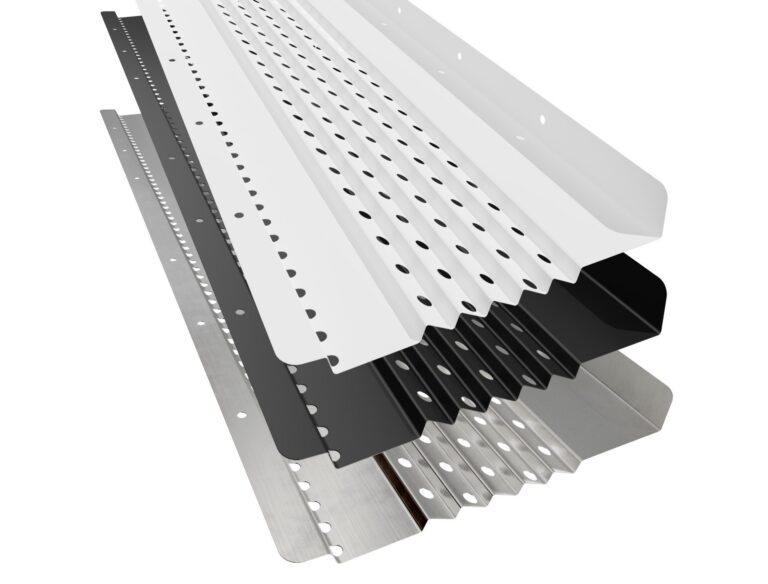
No, you cannot flip the gutter guard. We offer the All-Aluminum Gutter Guard in three colors, black, white, and mill finish. Whichever color you purchased is the intended color on the top, and this is the only way it can be installed correctly.
To ensure the optimal performance of your gutter guard, a basic understanding of the product and routine upkeep is recommended. Our gutter guards are designed to be low-maintenance.
For maintenance, consider using The 360 Degree Utility Cleaning Brush, explicitly crafted to clean any gutter guard effortlessly. This innovation allows you to stay safely on the ground, eliminating the need for ladders. Attach the brush to any standard extension pole and sweep debris from the ground. To learn more and make a purchase, please click here.
We have a 25-year warranty for our All-Aluminum gutter guards.
Use a garden hose to check that water is flowing through properly.
Gutterglove All-Aluminum gutter guards are made available in factory finished paint colors and in a mill finish. Modifications made to any materials or components, including painting, WILL VOID the manufacturer’s warranty and may negatively impact the drainage performance of the gutter guard.
Yes, our All-Aluminum gutter guards are available in Black, White, or Mill Finish.
To get the size of your gutter, measure the top of the gutter, starting at the front top outer lip, straight back to the fascia, just under the roof line.
Most gutters measure 5 IN. or 6 IN. Our All-Aluminum gutter guards are available in both sizes.
6 IN. guards require more aluminum material to manufacture than our 5 IN. guards, so there is a cost difference between the two sizes.
Punched aluminum gutter guards are best suited for regions that receive moderate amounts of rain. High-Flow Inside Miters can offer an easy solution for heavy flow areas of your roof. For regions with heavy rainfall, consider the Stainless Steel Micro-Mesh version of our gutter guards, which offer maximum protection.
It’s important to note that icicles can form on ANY gutter guard, including the possibility of ice dams.
CAUTION: ICICLES & ICE DAMS can form on your gutter during freezing conditions. Icicles can break and cause serious bodily harm. Properly installed, operated, and maintained heating elements on your roof and gutter can melt icicles and ice dams. We recommend consulting a licensed electrical contractor in good standing for installing any heating element products.
Yes. Snow melting and running down your roof can run off the side of the gutter and refreeze on the ground below when you have any gutter guard installed. Water frozen on surfaces can create slipping hazards and cause serious bodily harm.
CAUTION: ICICLES & ICE DAMS can form on your gutter during freezing conditions. Icicles can break and cause serious bodily harm. Properly installed, operated and maintained heating elements on your roof and gutter can melt icicles and ice dams. Use a licensed electrical contractor in good standing for installing any heating element products.
Yes. Snow melting on the roof can run off the side of the gutter and refreeze on the ground below with any gutter guard installed. Water frozen on surfaces can create slipping hazards and cause serious bodily harm.
The All-Aluminum Gutter Guards are made of .019 hardened aluminum. In extreme cases of hail, the gutter guard could sustain some surface dings.
There are many reasons rainwater runoff may occur. If you are experiencing this, please call our customer experience team (844) 359-7689.
Use a garden hose to check that water is flowing through properly.
Our gutter guards are available in 4-foot or 3-foot sections depending on the kit you purchase. The number of sections included is based on kit size.
The rear rail is intentionally shorter than the front to allow for expansion and contraction due to temperature changes.
As is common with building materials, our product lengths and kit sizes are provided in nominal measurements. When determining necessary coverage for gutter guard installation, take into account product overlap, cutting of miter corners, and end caps when determining your total footage.
Have Questions?
Contact the Atlas team today to gain access to all the resources and support you need for a successful gutter guard installation. We’re here to assist you every step of the way!